Miftah Fahmi
Sep 00,00:00 PM
Book a Call
FlowPilot0 / 14
100%

FlowPilot

Year

2025

Client

FlowPilot

Service

Pitch Deck

Stage

Pre-Seed

Year

2025

Client

FlowPilot

Service

Pitch Deck

Stage

Pre-Seed

I designed a 14-slide pre-seed pitch deck for FlowPilot, a self-directed AI SaaS concept for home service businesses. The presentation connects administrative workload with an assistant for scheduling, invoicing, and customer follow-ups. Company figures, customer metrics, team profiles, and funding targets are illustrative.
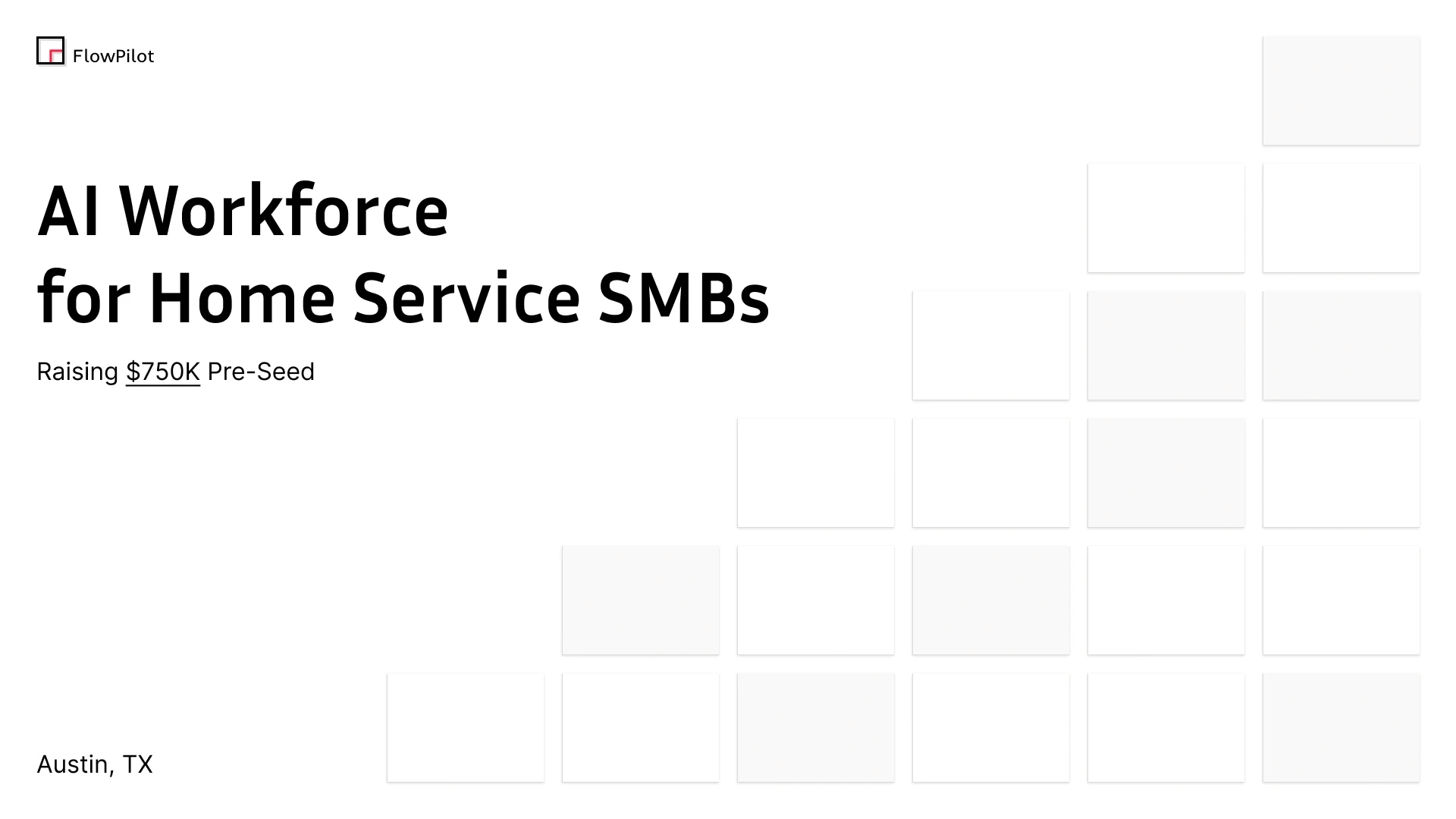
FlowPilot cover slide
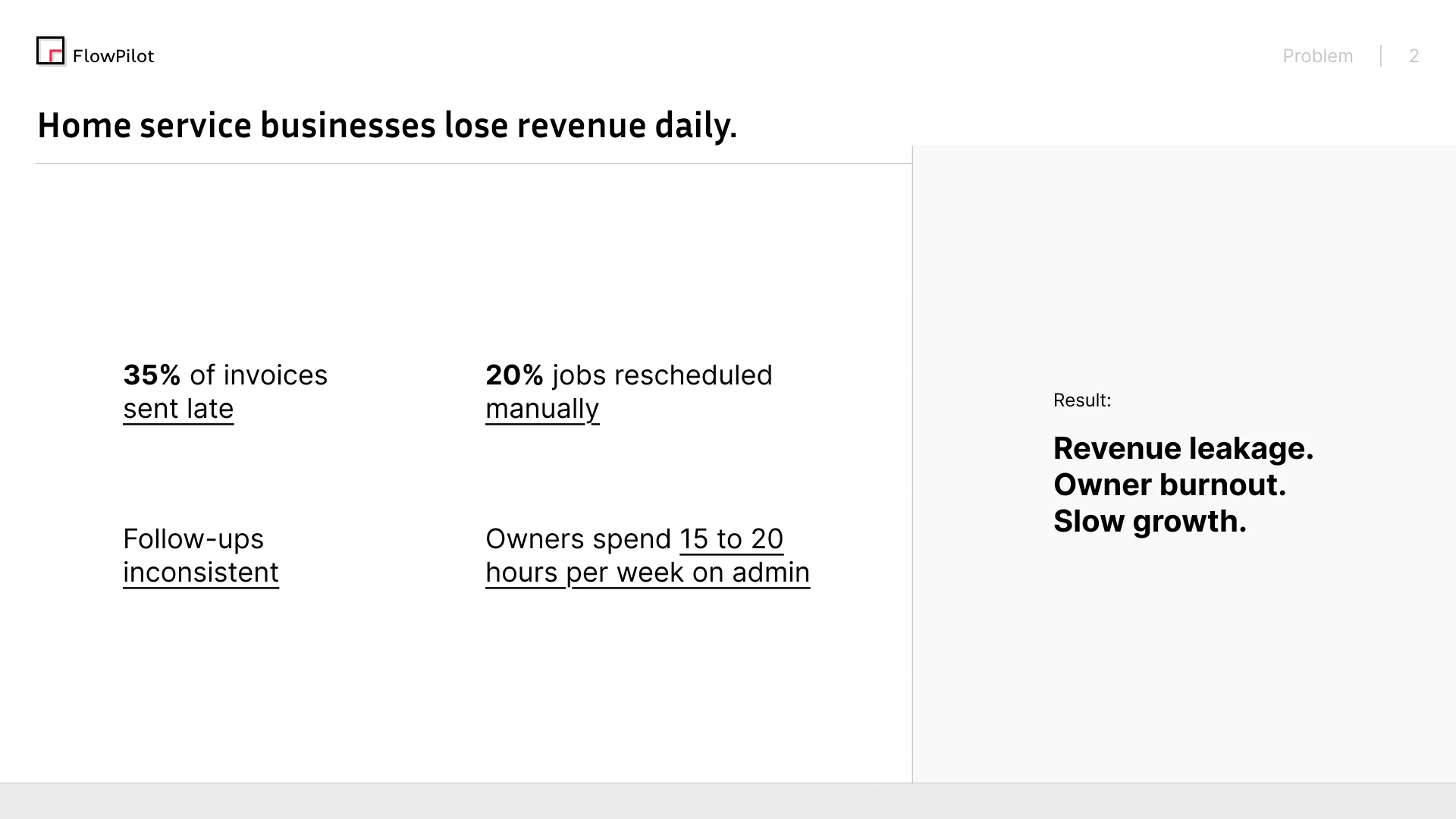
FlowPilot administrative workload across late invoices, rescheduling, and customer follow-ups.
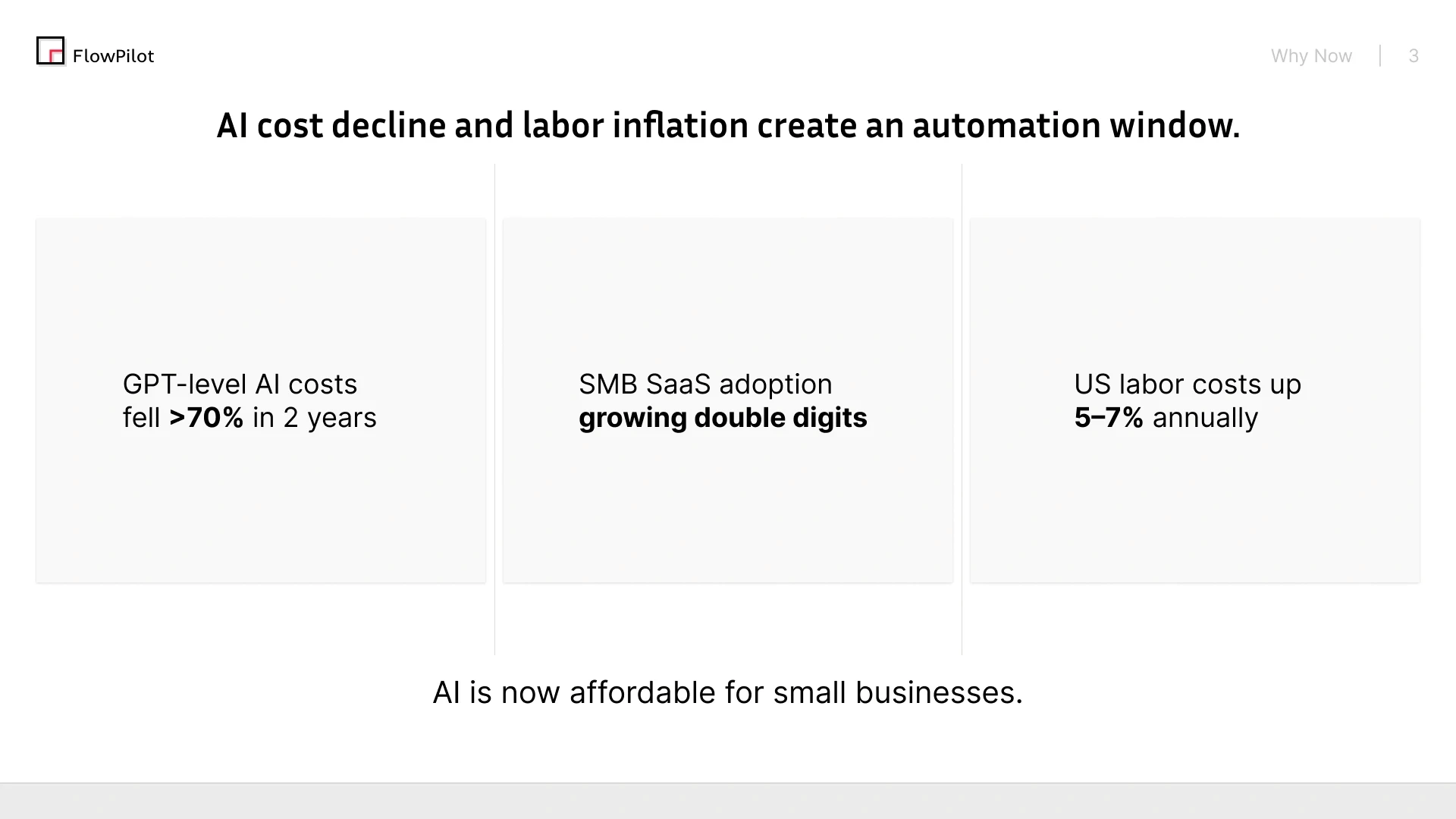
FlowPilot market timing comparing AI cost decline with labor cost pressure.
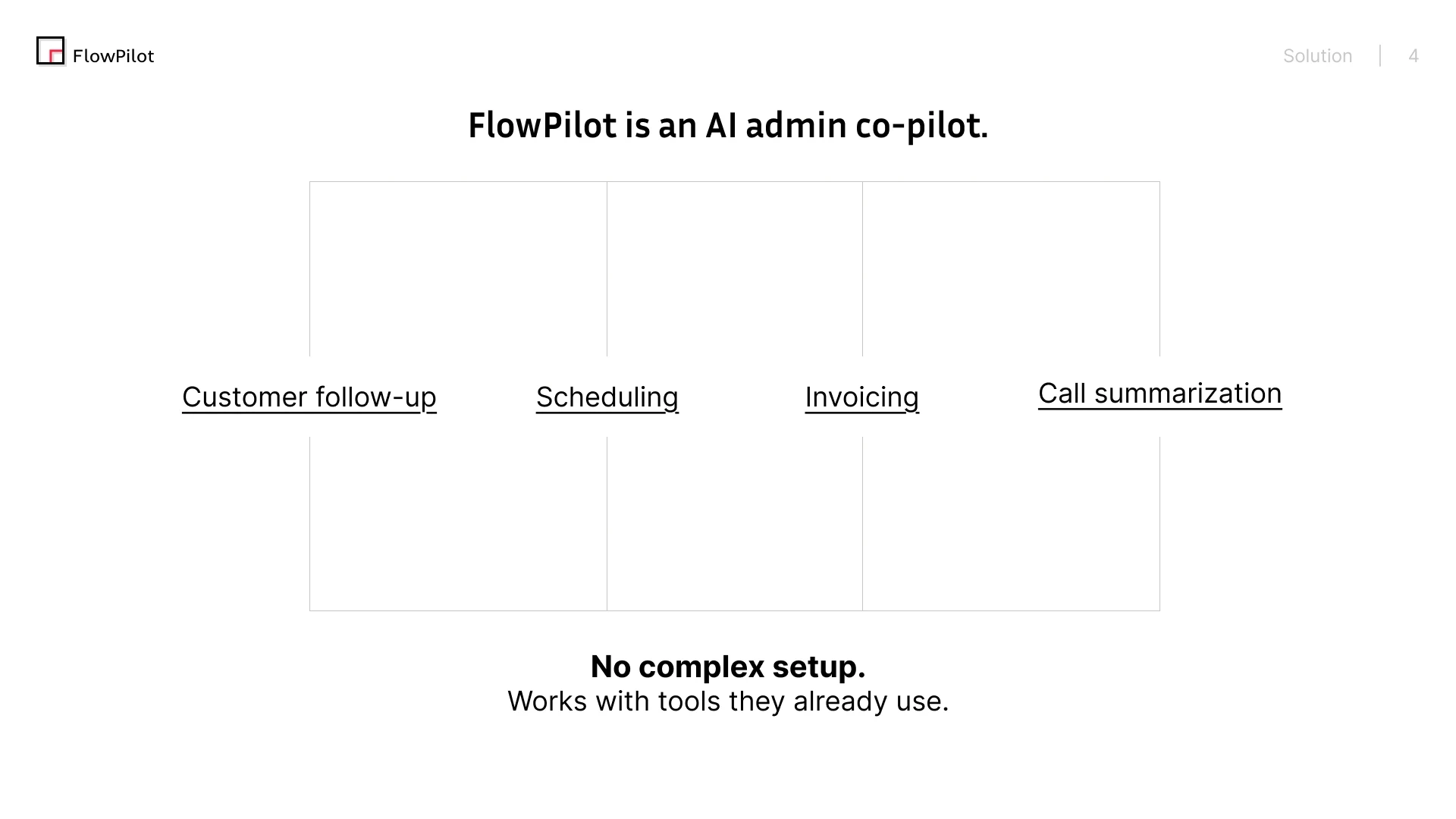
FlowPilot AI assistant capabilities for follow-ups, scheduling, invoicing, and call summaries.
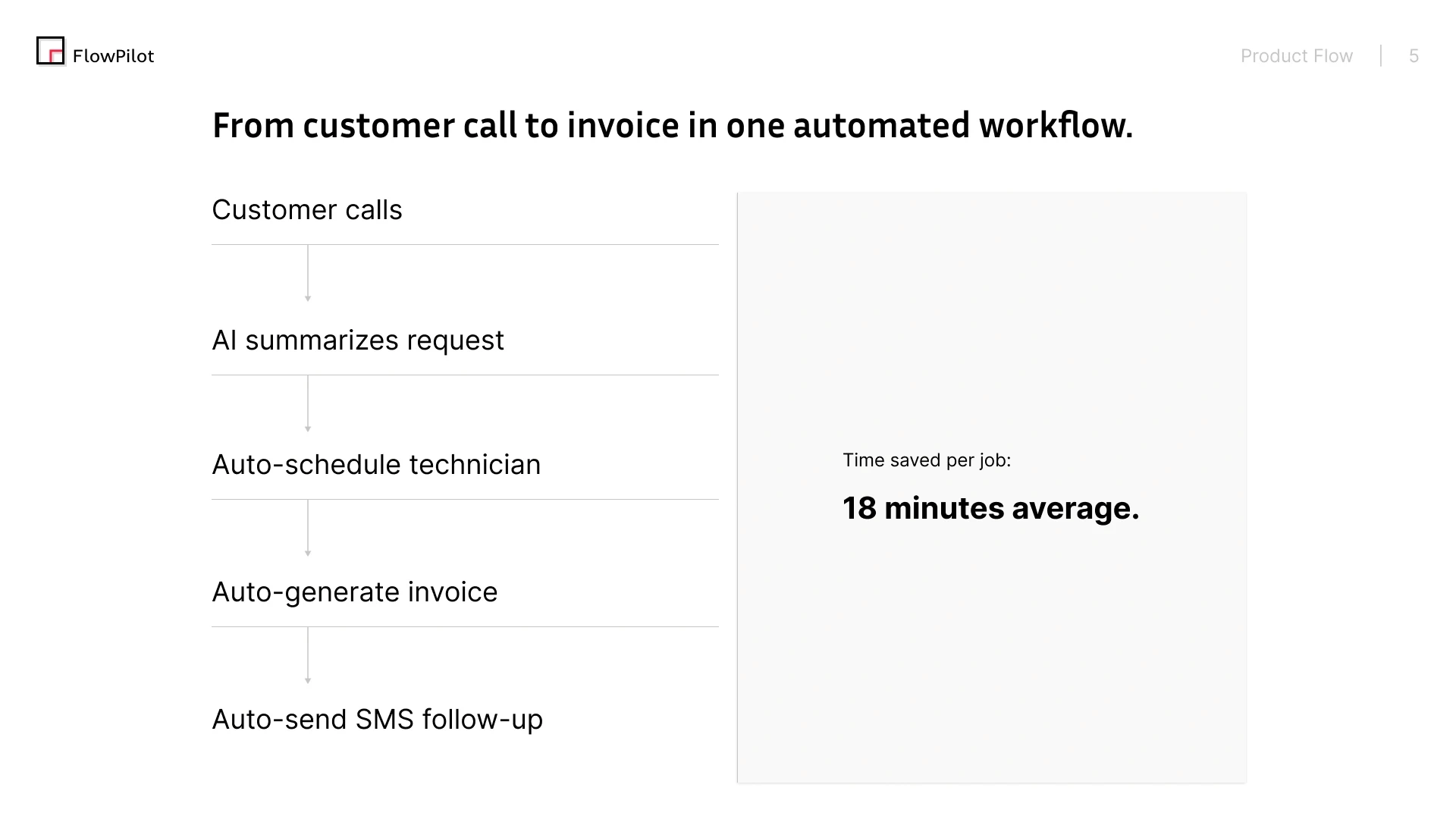
FlowPilot workflow from a customer call to scheduling, invoicing, and follow-up.
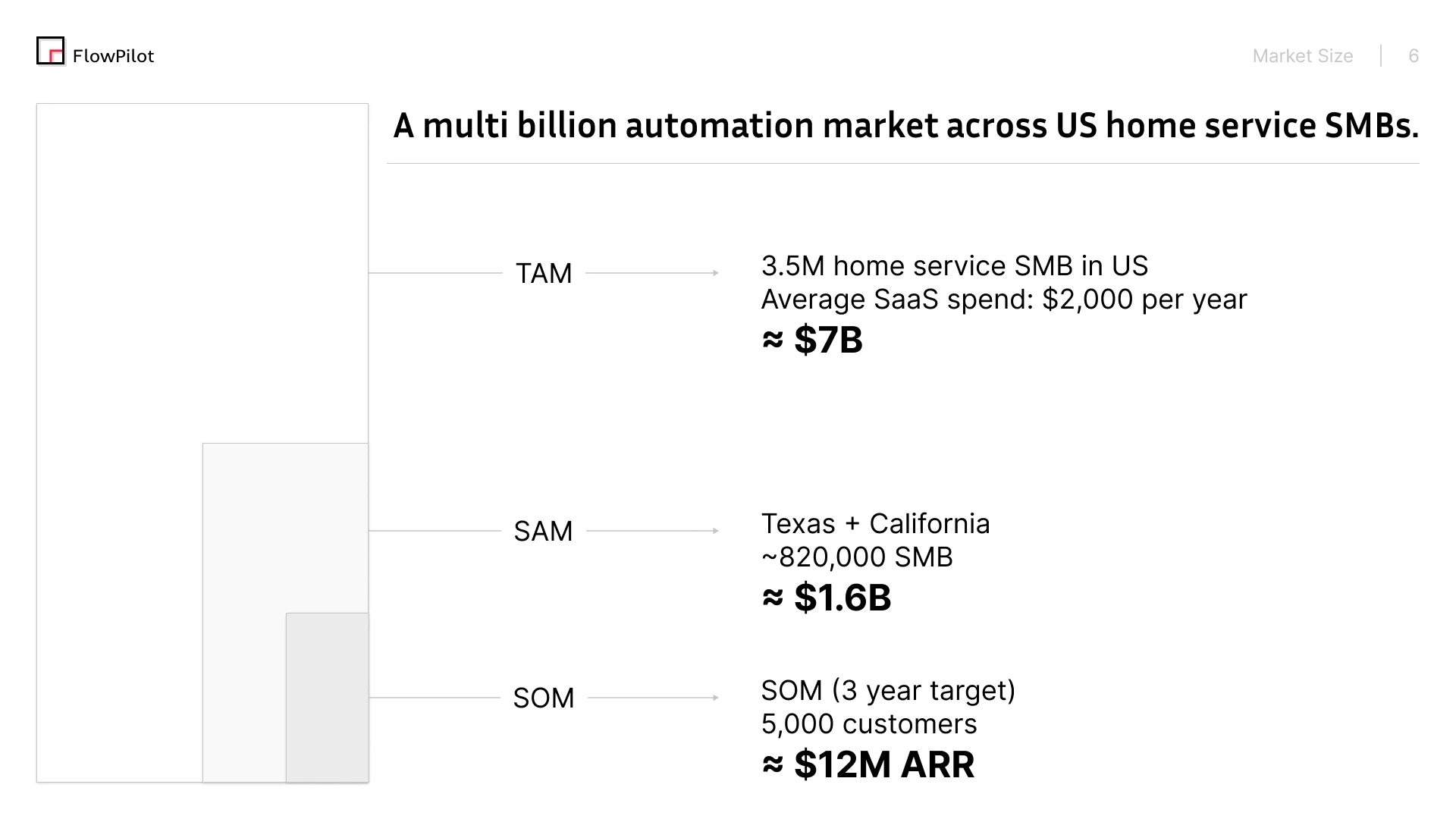
FlowPilot market sizing across US home service businesses and initial regional markets.
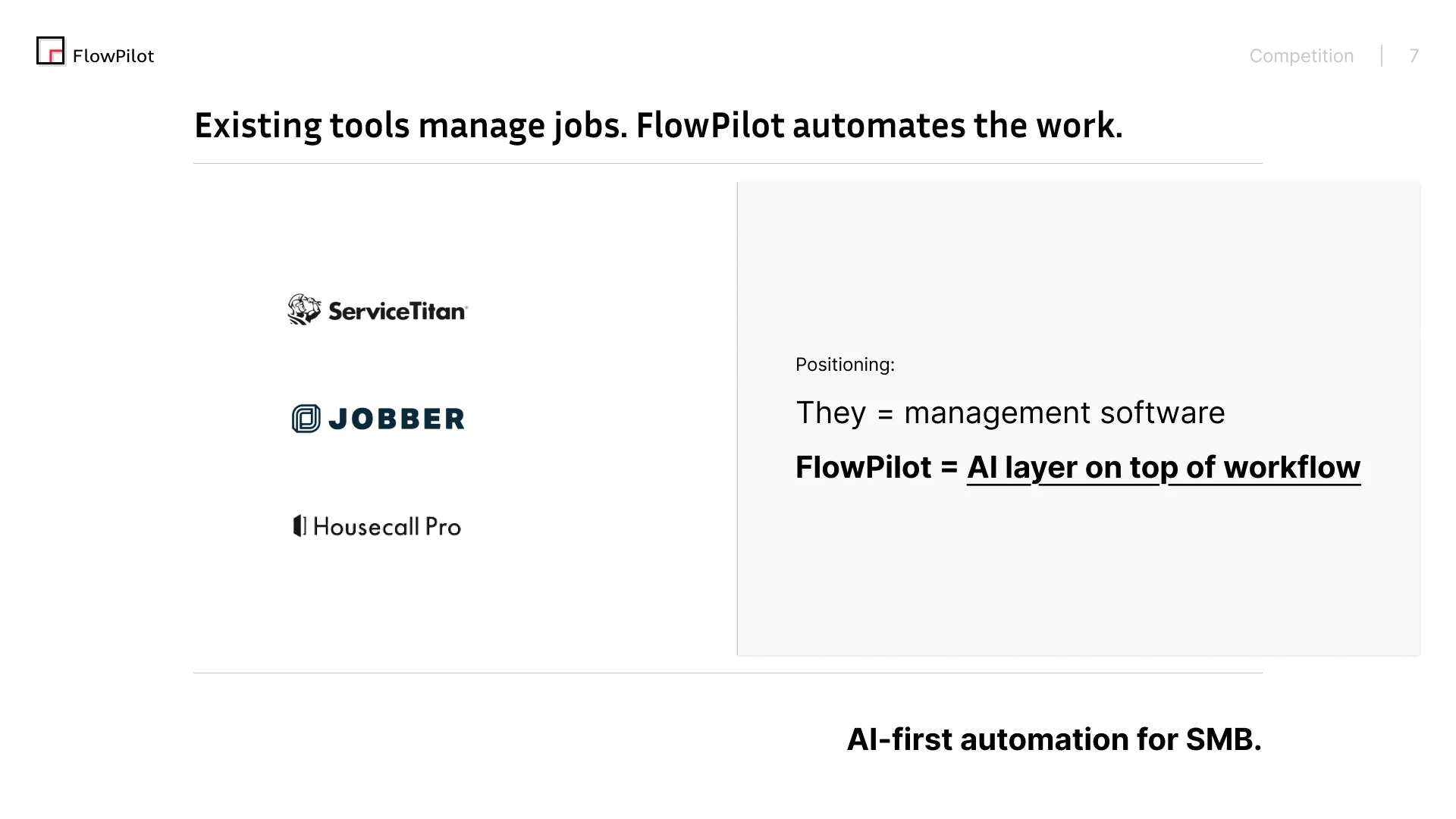
FlowPilot positioning as an automation layer alongside existing job management tools.
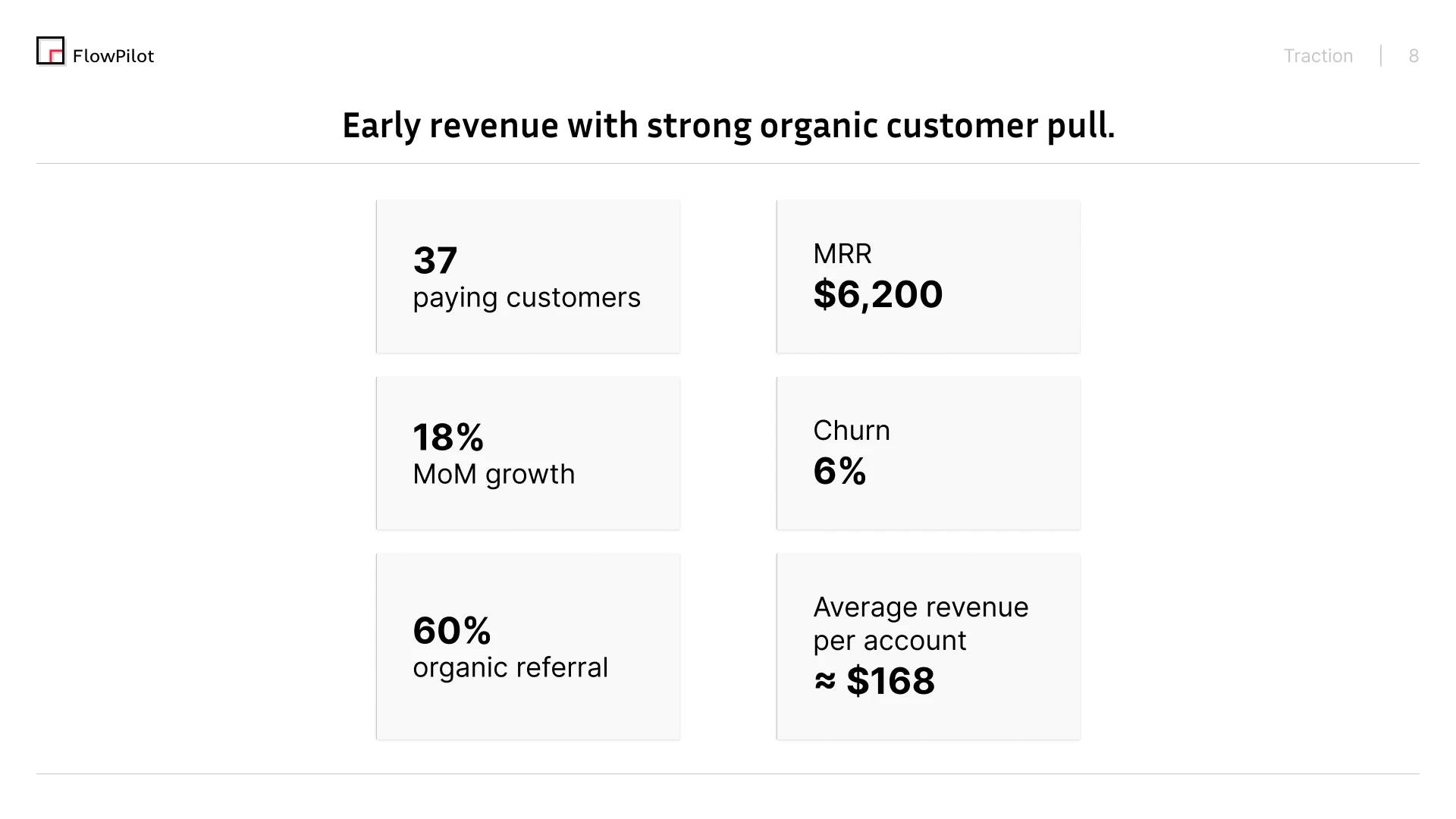
FlowPilot early customer, recurring revenue, growth, referral, and churn metrics.
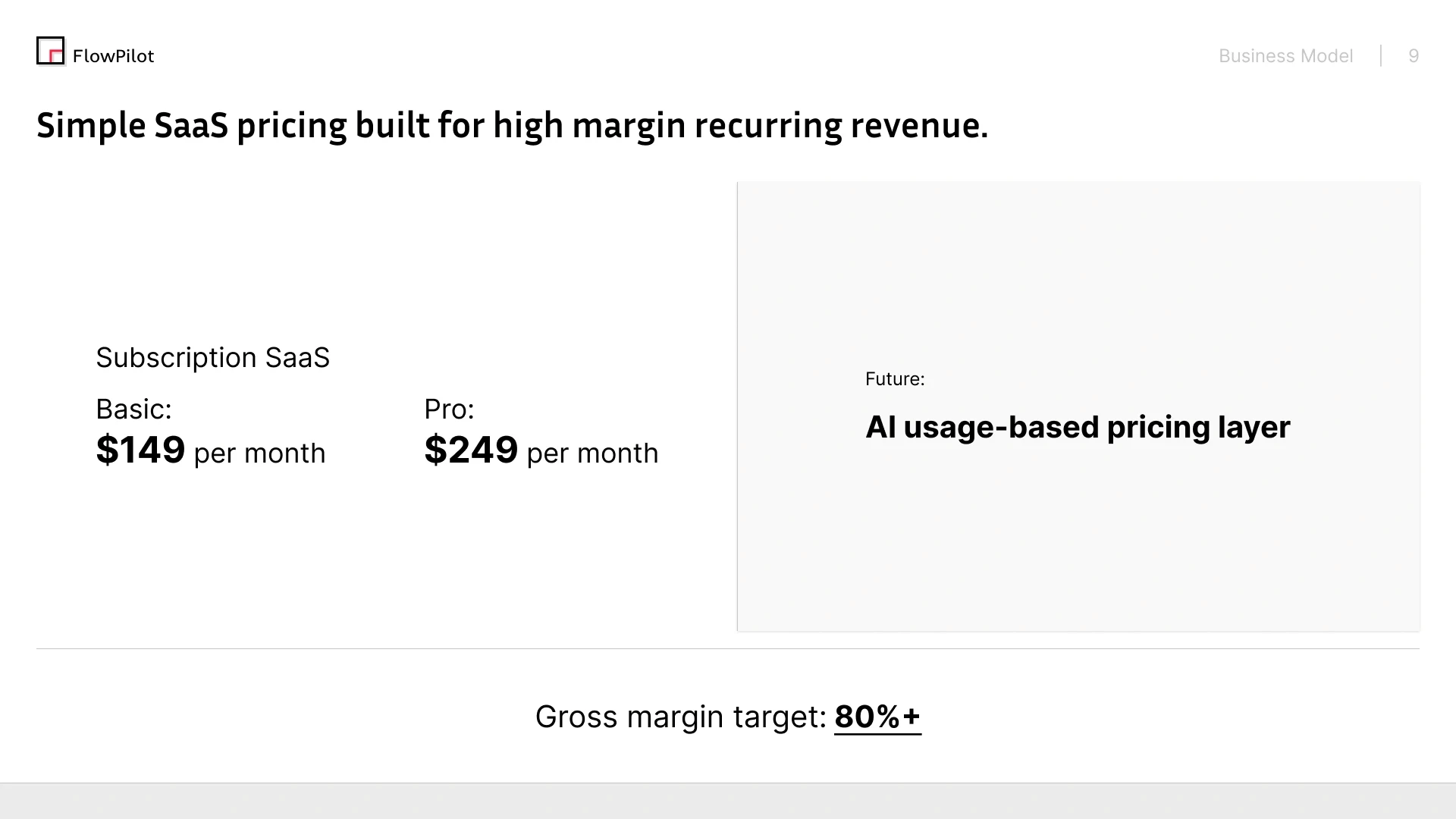
FlowPilot subscription pricing and proposed usage-based revenue expansion.
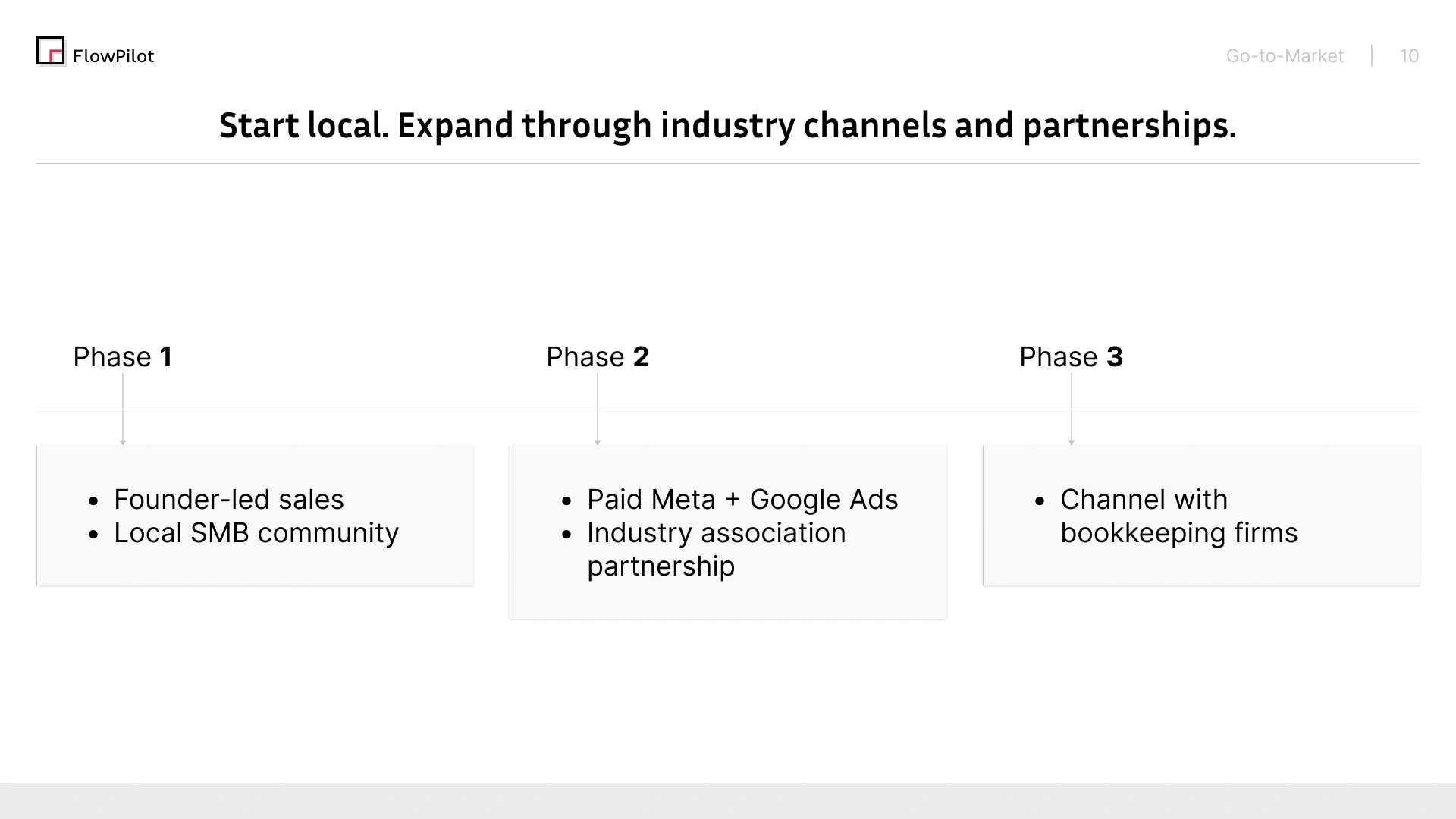
FlowPilot phased market entry through founder sales, advertising, and industry partnerships.
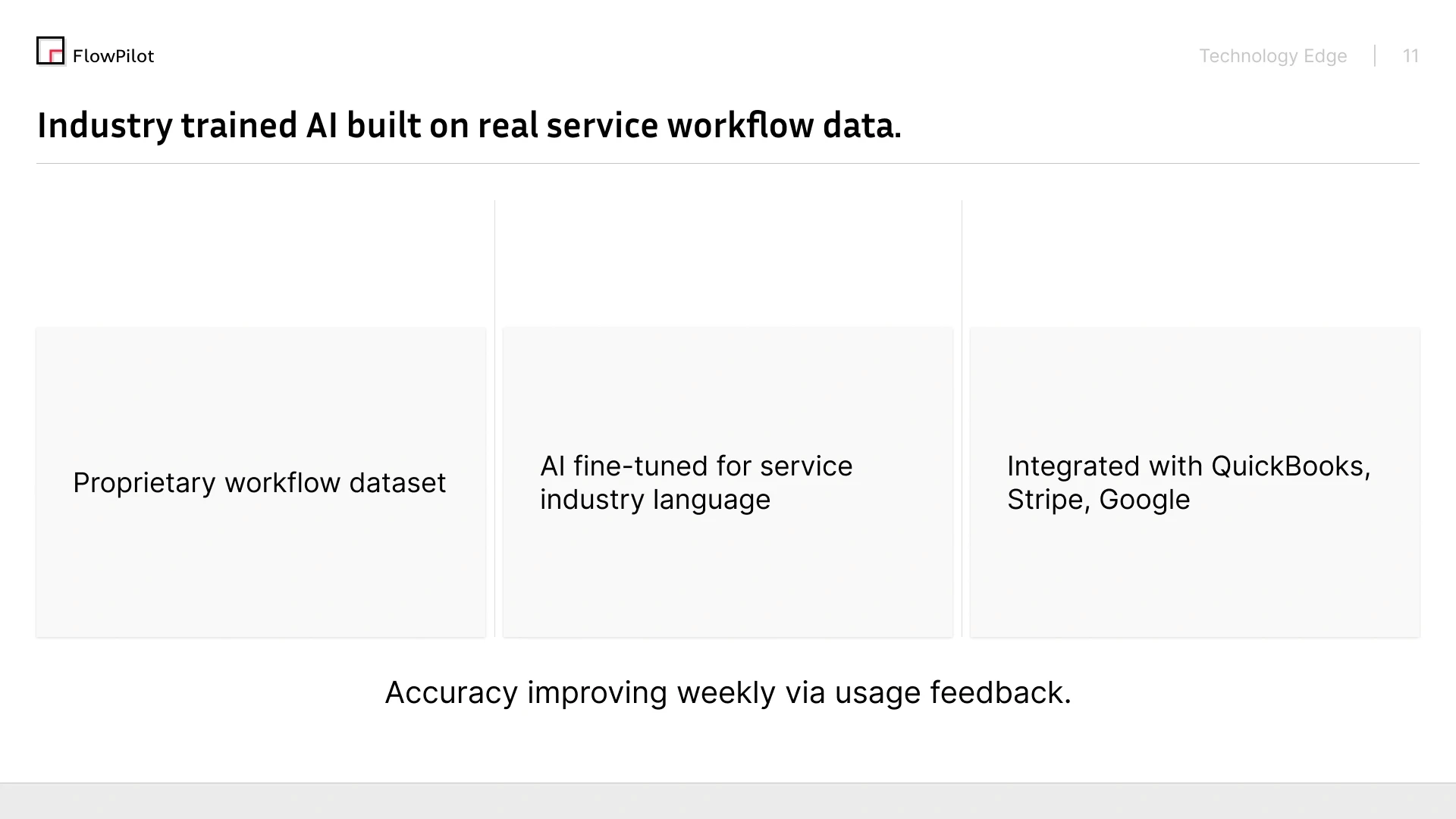
FlowPilot workflow data, AI training, and existing software integrations.
FlowPilot founder profiles across SaaS product development and applied AI.
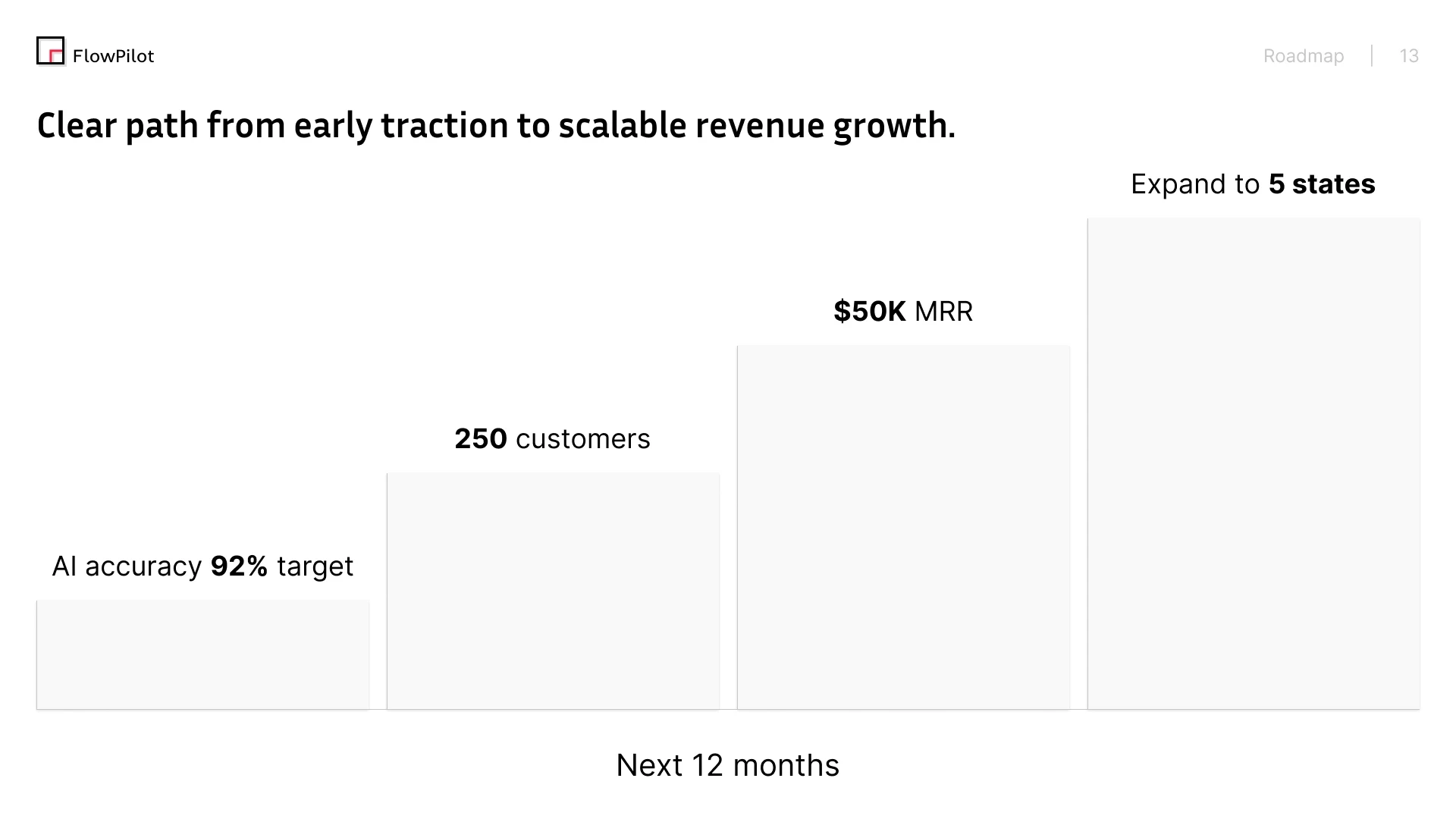
FlowPilot proposed product, customer, revenue, and geographic expansion milestones.
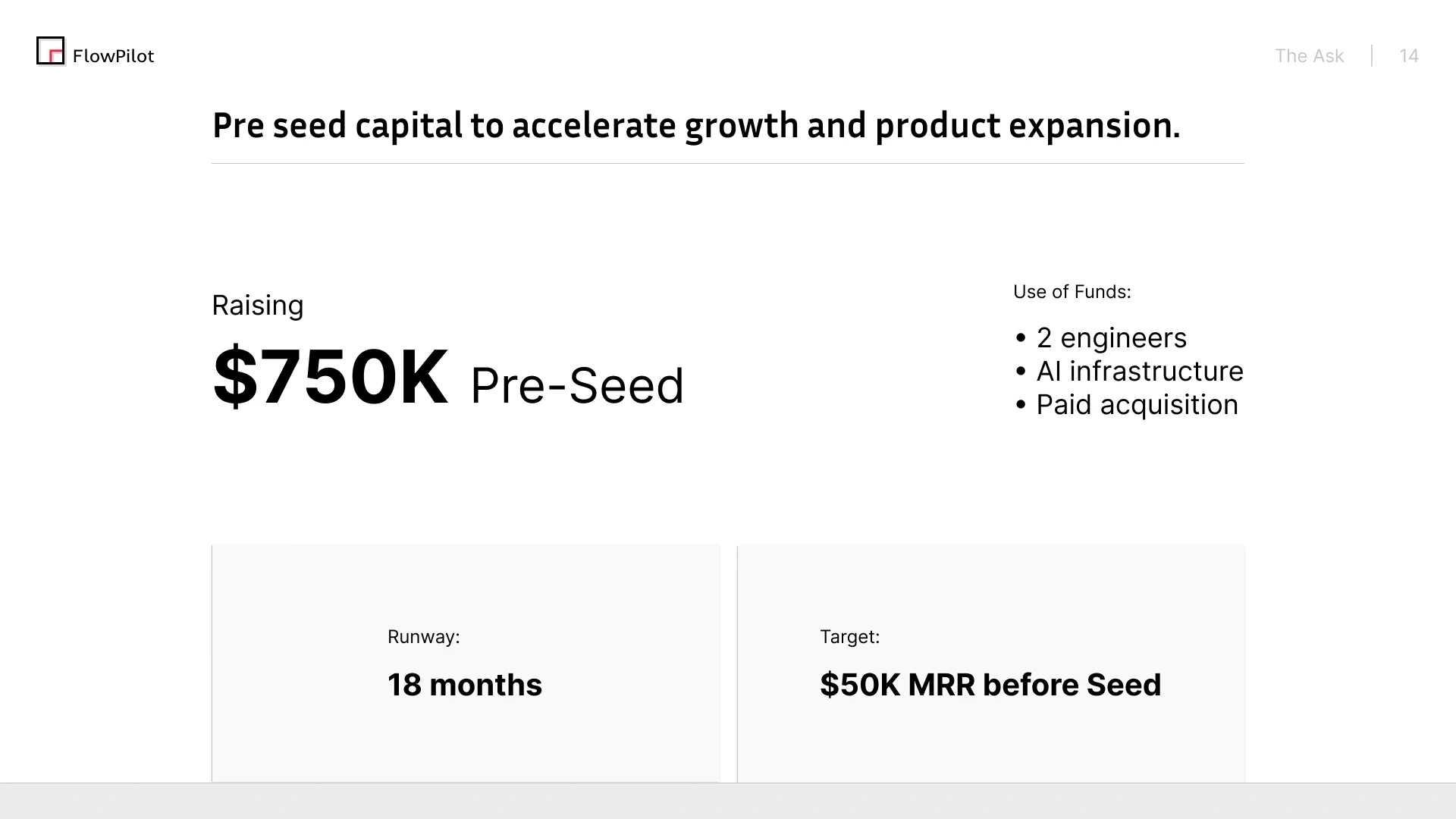
FlowPilot proposed pre-seed funding, hiring, runway, and recurring revenue target.

The Challenge

The deck needed to make an everyday operational problem clear to investors while explaining the product's place alongside existing job management software. Workflow detail, market sizing, and modeled traction needed a simple reading sequence.

Design Deliverable

I opened with administrative friction and the proposed automation opportunity, then mapped a customer call through scheduling, invoicing, and follow-up. A white canvas, black typography, pale-gray blocks, and consistent spacing keep attention on the information. A tiered market diagram separates opportunity levels, while metric tiles organize the growth scenario. Pricing panels, a phased acquisition plan, and milestone bars give the commercial story distinct structures. The closing slide connects the proposed funding with hiring, runway, and a revenue target.